Like many of the books I've read, Managing Humans is essentially a printed-out blog, and you can tell that pretty quickly by the terse, disjointed, and stream-of-consciousness hops from one chapter to the next. The first few chapters were rough enough to give me the impression (a) it was going to be painful to finish the book, and (b) I couldn't wait to rip it a new one when I reviewed it. However, it got better, so I'll have to save my ripping for another victim.
First, the bad. In the early chapters the author uses some hyperbolically fabricated scenarios involving over-the-top caricatures of personalities to assert that everybody you work with is an idiot and they can be categorized into these nice little buckets and since he's been doing this for so many years he knows all the angles and this is how it is and this is how you should deal with it. This preaching tone and one-sided view of things really left a bad taste in my mouth.
However, in later chapters the author seems to come back down to earth and realize there are other sides to every story and he speaks more in the tone of "this is how it happened in my particular situation and I think this was the best way to handle it." That sat a lot better with me. If I were a betting man, I would speculate that the early chapters, as blog posts, received some critical feedback and the author took it to heart in his future writings.
Having been around the block a few times, from the lowly sysadmin to the even lowlier CTO, I could relate to a lot of the author's parables and anecdotes. In some cases he's spot on and offers great advice, but in others he's rather short-sighted and preachy.
In summary I would recommend the book because it's always good to see your industry through somebody else's eyes, with the caveat that it's a bumpy road in the beginning, and expect that you'll be reading a blog on paper as opposed to a smooth-flowing book.
Showing posts with label book review. Show all posts
Thursday, November 26
Wednesday, November 11
Book Review: Crush It!
I've never read a motivational self-help book, but I imagine this is what they are like. Gary compresses a lot of good content into a very small book, but there's a plethora of cheerleading. His core message can be boiled down to work really hard (crush it) and be honest with yourself and others (your DNA).
The chapters are peppered with humorous and inspiring anecdotes from Gary's childhood, which at times seem contradictory. For example, an early chapter tells of Gary's nearly poor and starving family splurging on two Star Wars action figures for his Christmas present, followed a couple chapters later by his father giving him $1,000 to set up a booth at a baseball card convention.
Gary tells a good story, and he has some great advice on leveraging Internet trends, especially the social networking aspect, to "build your brand." He's also adamant about breaking the mold, chasing after advertisers directly rather than hiding behind facades like Google's AdSense; go straight to the money source and cut out the middle man. I hear Gary speak at half of the conventions I attend (even had lunch with him at the last one) and I like him and his message. If you haven't seen him, head over to Google and find a couple of his videos. His Wine Library TV shows are great, but his keynotes are awe inspiring, especially FOWA Miami from a couple years back.
Unfortunately this book, like so many success stories I've read recently, subscribes to the theory of "this worked for me, so it's gotta work for you, right?" Gary says you should be working all the time, "until your eyes bleed," yet the jacket sports a quote from his bud Tim Ferris who only works four hours a week. Likewise Gary makes an off-the-cuff comment about real entrepreneurs not spending their time playing poker with their buds, an apparent jab at bazillionaire Jason Calacanis who seems addicted to the game.
Despite the sometimes seemingly-mixed messages, I do recommend this book because it's short and to the point and full of great advice. My only caveat is we can all learn from his experiences, but we can't all be Gary V.; there are many ways to succeed and Gary's isn't the only one.
The chapters are peppered with humorous and inspiring anecdotes from Gary's childhood, which at times seem contradictory. For example, an early chapter tells of Gary's nearly poor and starving family splurging on two Star Wars action figures for his Christmas present, followed a couple chapters later by his father giving him $1,000 to set up a booth at a baseball card convention.
Gary tells a good story, and he has some great advice on leveraging Internet trends, especially the social networking aspect, to "build your brand." He's also adamant about breaking the mold, chasing after advertisers directly rather than hiding behind facades like Google's AdSense; go straight to the money source and cut out the middle man. I hear Gary speak at half of the conventions I attend (even had lunch with him at the last one) and I like him and his message. If you haven't seen him, head over to Google and find a couple of his videos. His Wine Library TV shows are great, but his keynotes are awe inspiring, especially FOWA Miami from a couple years back.
Unfortunately this book, like so many success stories I've read recently, subscribes to the theory of "this worked for me, so it's gotta work for you, right?" Gary says you should be working all the time, "until your eyes bleed," yet the jacket sports a quote from his bud Tim Ferris who only works four hours a week. Likewise Gary makes an off-the-cuff comment about real entrepreneurs not spending their time playing poker with their buds, an apparent jab at bazillionaire Jason Calacanis who seems addicted to the game.
Despite the sometimes seemingly-mixed messages, I do recommend this book because it's short and to the point and full of great advice. My only caveat is we can all learn from his experiences, but we can't all be Gary V.; there are many ways to succeed and Gary's isn't the only one.
Sunday, September 20
Book Review: Free
I downloaded Free on my Kindle because, well, it was free. I hadn't heard of the author before, nor any of his prior books, but I saw a promotional message somewhere - I don't even recall where - noting that Amazon was letting you download the book for free, so I did. And, I read it. And, it's good.
What's it all about? Well as the title might have hinted, it's about giving things away for free, and how that's a viable business. Sure, it's a little more complicated in that, but the book does a good job of explaining how Google gives away all it's services for free but still makes a metric butt-load of money, how companies like PosgreSQL give their database away for free and charge for premium reliable on-call support, how free is killing some industries (recording industry, newspapers) but uplifting others (iTunes, Craig's List).
I'm jotting down this review from a slightly stale memory, so I'm only scratching the surface of the topics covered. Do yourself a favor and pick up a copy - a free one if you can find it, of course. I'll be considering the author's other books for my reading list now, which is yet another way free can make you (or him in this case) money.
What's it all about? Well as the title might have hinted, it's about giving things away for free, and how that's a viable business. Sure, it's a little more complicated in that, but the book does a good job of explaining how Google gives away all it's services for free but still makes a metric butt-load of money, how companies like PosgreSQL give their database away for free and charge for premium reliable on-call support, how free is killing some industries (recording industry, newspapers) but uplifting others (iTunes, Craig's List).
I'm jotting down this review from a slightly stale memory, so I'm only scratching the surface of the topics covered. Do yourself a favor and pick up a copy - a free one if you can find it, of course. I'll be considering the author's other books for my reading list now, which is yet another way free can make you (or him in this case) money.
Tuesday, August 25
Book Review: CA$HVERTISING
If you've read the book Predictably Irrational about the irrational decisions we humans make when it comes to buying stuff, CA$HVERTISING will show you how to exploit those quirks to maximize your profit. I hate to make a cliche analogy (which I think I've used in a prior review) but it's really like The Art of War for advertising; it's a hundred or more little bite-sized chunks of tips and techniques for getting prospective customers to notice your ad, read it, and act on it. The author supports each nugget of wisdom with a plethora of studies and statistics. And, at the back of the book, it's all summed up in a nice concise checklist for your next propaganda endeavor. Even if you're not an advertiser or promoter (like me) it's worth a read just to open your eyes to the tricks and techniques being used to lure you into parting with your hard-earned money.
Sunday, July 26
Book Review: Who Moved My Cheese?
Who Moved My Cheese? is a very short book. The publisher went through great lengths to make it feel like a book, with nice thick hard covers and large type, but I think most readers would consider it merely a lengthy essay. It took me about an hour to read from cover to cover.
Who Moved My Cheese? is a parable about dealing with change told through four caricatures that live in a maze, subsist off of cheese, and how they deal with the sudden loss of said cheese. And for those readers that may be too dense to grok the not-even-remotely-subtle lessons taught by the parable, it's bookended with a fictional discussion by other more-life-like characters who liken their own jobs and personal lives to the events in the story.
Of course the point of the book is to open the eyes of the reader to the inevitability of change in their lives and workplaces and encourage them to accept it, embrace it, don't fear it, and deal with it. It's a little cartoony and preachy in places, and sometimes draws out the point much further than necessary, but for just a one-hour read I recommend checking it out so at the very least the next time it comes up in conversation you can participate in the discussion.
Who Moved My Cheese? is a parable about dealing with change told through four caricatures that live in a maze, subsist off of cheese, and how they deal with the sudden loss of said cheese. And for those readers that may be too dense to grok the not-even-remotely-subtle lessons taught by the parable, it's bookended with a fictional discussion by other more-life-like characters who liken their own jobs and personal lives to the events in the story.
Of course the point of the book is to open the eyes of the reader to the inevitability of change in their lives and workplaces and encourage them to accept it, embrace it, don't fear it, and deal with it. It's a little cartoony and preachy in places, and sometimes draws out the point much further than necessary, but for just a one-hour read I recommend checking it out so at the very least the next time it comes up in conversation you can participate in the discussion.
Thursday, May 14
Book Review: Envisioning Information
I had this book on my reading list because I'd heard DHH praise it a couple years back. Although I'm just a lowly software developer, I've always had a fascination with user interaction and interface design. I devoured the books by Norman, Tognazzini, Nielsen, Raskin, etc. I was hoping to glean similar insight from this tome.
The Bad
Unfortunately, it's not an easy book to read. There's something about the author's style of writing that I found to be obtuse. The way he weaves his words I quite honestly couldn't tell most of the time whether he was praising or condemning a particular visualization technique. The book is peppered with a plethora of illustrations, maps, charts, diagrams, etc. with several on each page, but half the time I couldn't figure out which image the author was referring to in the text.
The Good
Regardless of the struggle to consume the verbiage, there are some gems of wisdom to be mined. The author drills home the concept of "1 + 1 = 3" in the sense of combining two simple visualization techniques can add a third dimension of information. This is demonstrated with both good and bad consequences. The author also stresses the avoidance of decoration that distracts from the data and information "prisons" such as thick dark grid lines or table borders that could be removed completely and simply implied by the layout of the information via white space or "negative shapes". The most impressive examples in the book are the train time tables - it's mind-boggling how much data can be cleanly and clearly expressed in a two-dimensional chart with the right finesse.
The Bad
Unfortunately, it's not an easy book to read. There's something about the author's style of writing that I found to be obtuse. The way he weaves his words I quite honestly couldn't tell most of the time whether he was praising or condemning a particular visualization technique. The book is peppered with a plethora of illustrations, maps, charts, diagrams, etc. with several on each page, but half the time I couldn't figure out which image the author was referring to in the text.
The Good
Regardless of the struggle to consume the verbiage, there are some gems of wisdom to be mined. The author drills home the concept of "1 + 1 = 3" in the sense of combining two simple visualization techniques can add a third dimension of information. This is demonstrated with both good and bad consequences. The author also stresses the avoidance of decoration that distracts from the data and information "prisons" such as thick dark grid lines or table borders that could be removed completely and simply implied by the layout of the information via white space or "negative shapes". The most impressive examples in the book are the train time tables - it's mind-boggling how much data can be cleanly and clearly expressed in a two-dimensional chart with the right finesse.
Friday, April 10
Book Review: Never Eat Alone
I think I can pretty much sum up the entire book in one sentence: Be a networking whore, but be sincere, and pay it forward.
Those are the three main points author Keith Ferrazzi drills into your skull, but he uses a few more words, and couple hundred more pages. Everybody in your life is an important networking contact, from your garbage man to your employer's president. Never be a phony; always be yourself. Don't schmooze only the people you think are important or powerful and likely to advance your career. Don't piss on your underlings or step on your peers to climb higher up the ladder. And last but not least, always come to the party offering to give something first, don't start out by asking for something, and don't expect reciprocation.
Ferrazzi is a fine writer, and he peppers his words of wisdom with entertaining self-deprecating stories of learning from his mistakes. The book makes it sound like the only thing he does all day is make phone calls, send e-mails, and throw dinner parties, non-stop. That sounds like a career in itself to me, and in his case (books, speaking, consulting, etc.) I believe it is. That doesn't leave much free time to focus on your main career, for those of us who have jobs other than full-time networking. But, it's a good eye-opener to the means and method of those who are well-connected. I'm sure I'll cherry pick a few of his techniques (that I'm not already doing) and I'll be a better person for it. My only real gripe with the book is the same with most books: too many words. He could have got his message across in a fraction of the verbiage.
Those are the three main points author Keith Ferrazzi drills into your skull, but he uses a few more words, and couple hundred more pages. Everybody in your life is an important networking contact, from your garbage man to your employer's president. Never be a phony; always be yourself. Don't schmooze only the people you think are important or powerful and likely to advance your career. Don't piss on your underlings or step on your peers to climb higher up the ladder. And last but not least, always come to the party offering to give something first, don't start out by asking for something, and don't expect reciprocation.
Ferrazzi is a fine writer, and he peppers his words of wisdom with entertaining self-deprecating stories of learning from his mistakes. The book makes it sound like the only thing he does all day is make phone calls, send e-mails, and throw dinner parties, non-stop. That sounds like a career in itself to me, and in his case (books, speaking, consulting, etc.) I believe it is. That doesn't leave much free time to focus on your main career, for those of us who have jobs other than full-time networking. But, it's a good eye-opener to the means and method of those who are well-connected. I'm sure I'll cherry pick a few of his techniques (that I'm not already doing) and I'll be a better person for it. My only real gripe with the book is the same with most books: too many words. He could have got his message across in a fraction of the verbiage.
Sunday, January 25
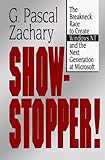
Book Review: Show Stopper!
My first book of 2009 was a crusty old out-of-print classic I'd given up on finding a copy of years ago, but I found it under the X-mas tree last month courtesy of my awesome girlfriend. The book was, of course, Show Stopper!: The Breakneck Race to Create Windows NT and the Next Generation at Microsoft. I'm no fan of Microsoft, but I'm a sucker for software development stories, no matter how embellished. From the definitive The Soul of a New Machine to the almost farcical Microserfs and everything in between like The Autodesk File and Dreaming in Code and I could list another dozen from my reading list of the last decade but I'll save that for another time and another post. Essentially, I love reading about how other people suffered through pushing a product to market, because I've lived it myself a few times now, and I suspect I'll do a few more tours of duty before my retirement.
Show Stopper! makes a for a good leisurely read, but unfortunately it's far more focused on the people and their relationships rather than the technological and political hurdles they had to overcome. In other words, it's more fluff, less stuff. The book slowly and methodically introduces core people on the Windows NT team, giving their back story, explaining their motivations, touching on their personal lives outside of the office, etc. Technology and politics are covered, but not in great detail, and in some cases so abstractly as to insult a reader that hungers for the nitty gritty specifics.
Without spoiling the plot too much, a complex new operating system is conceived, an all-star team is assembled to produce it, deadlines are missed by years, tempers flare, nerves are shot, power plays are made, and in the end if ships. Of course, you knew how it ends. It saddens me think some of you readers are young enough to not have even used Windows NT. Sometimes working with the old clunky stuff gives you a much better appreciation for what you have today. Perhaps I'd not be such a fanatical OS X pundit today if I'd not had to launch a product or two on top of Windows NT.
So in summary, Show Stopper! is worth a read. It's not in my top five of historical dramatizations of big software development launches, but maybe it's in the top ten. Find yourself a copy while you still can.
Thursday, December 18
Book Review: What Got You Here Won't Get You There
The premise of this book is the cut-throat no-mercy end-justifies-the-means killer instinct that got you where you are today (upper management) is paradoxically going to prevent you from climbing that final rung of the ladder to becoming a successful top dog CEO. The author preaches - with anecdotal parables cherry picked from his vast clientele - once you reach the pinnacle of your career you need to change your competitive ways and be more nurturing to and supportive of your staff rather than using them as stepping stones to success. He builds a nice long list of traits and behaviors to be cognizant of changing, such as taking credit for the work of others, always adding your two cents just to assert your authority, showing favoritism to employees, etc. He outlines his technique for breaking potential executives of these habits, interviewing the subordinates to determine which areas need the most attention, and making the 'patient' actively participate in the exercises of periodic self review. It's one of those books where each chapter you read you think, "Ha, I knew a guy like that!" but you rarely think, "Ooh he's talking about me here." If you're in upper management and you're having trouble reaching the next level or you've got turmoil with your peers and employees, it might be worth cracking this book and doing a little self evaluation.
Saturday, December 13
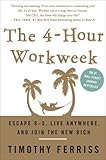
Book Review: The 4-Hour Workweek
I added this book to my reading list a long time back but kept bumping it down in priority because I expected it to read like one of those get rich quick infomercials you see in the wee hours of the morning when most sane people are sleeping. I was pleasantly surprised to discover I was dead wrong, and the timeliness was uncanny as I was "downsized" from my employer of nine years shortly after I cracked the book (metaphorically speaking - I read it on my Kindle).
The general gist of the book is retirement is a scam; you're saving money for when you're too old to spend it and too feeble to enjoy spending it on adventures like traveling around the world. The author recommends you start taking mini-retirements right now, while you're young and energetic enough to carpe diem.
He expands on this by pointing out that living like a millionaire doesn't require being a millionaire. Instead of focusing on making a million dollars over the next twenty years, focus on making just enough money to take the adventure you desire as soon as possible, like three-thousand dollars to spend a month in Berlin studying the tango. Rinse and repeat.
How is this possible? The author goes to some pretty impressive extremes insisting that most of what you do during the day is bullshit busywork and if you quit it all cold turkey there would be practically no consequences. He preaches that you can start by answering e-mail twice a day, then work your way to once a week, spending just an hour on the task. You can send all phone calls straight to voice mail and hire by-the-hour personal assistants in India to handle all the minutiae of your day to day responsibilities, both personal and business. In short, it's delegation on steroids.
The end goal is to own a business and not run the business. The former gets to jet set around the world and party while the latter punches the clock and works themselves to an early grave. The author insists it's easier than it sounds and the hard part it just making the leap - I'm dubious, of course.
Regardless of the fantastic stories and extraordinary claims contained in the book, I still consider it a worthy read as at the very least it makes you think. It makes you reconsider what you do at work on a daily basis and reevaluate how much of it really makes a difference and how much of it is masturbatory. It also makes you wonder "what if" I did make the leap?
The general gist of the book is retirement is a scam; you're saving money for when you're too old to spend it and too feeble to enjoy spending it on adventures like traveling around the world. The author recommends you start taking mini-retirements right now, while you're young and energetic enough to carpe diem.
He expands on this by pointing out that living like a millionaire doesn't require being a millionaire. Instead of focusing on making a million dollars over the next twenty years, focus on making just enough money to take the adventure you desire as soon as possible, like three-thousand dollars to spend a month in Berlin studying the tango. Rinse and repeat.
How is this possible? The author goes to some pretty impressive extremes insisting that most of what you do during the day is bullshit busywork and if you quit it all cold turkey there would be practically no consequences. He preaches that you can start by answering e-mail twice a day, then work your way to once a week, spending just an hour on the task. You can send all phone calls straight to voice mail and hire by-the-hour personal assistants in India to handle all the minutiae of your day to day responsibilities, both personal and business. In short, it's delegation on steroids.
The end goal is to own a business and not run the business. The former gets to jet set around the world and party while the latter punches the clock and works themselves to an early grave. The author insists it's easier than it sounds and the hard part it just making the leap - I'm dubious, of course.
Regardless of the fantastic stories and extraordinary claims contained in the book, I still consider it a worthy read as at the very least it makes you think. It makes you reconsider what you do at work on a daily basis and reevaluate how much of it really makes a difference and how much of it is masturbatory. It also makes you wonder "what if" I did make the leap?
Tuesday, September 30
Book Review: Purple Cow
Hated it. I knew nothing about the author (Seth Godin) before reading the book, it was just a title I had heard tossed around at a conference or on a podcast, I can't recall. After reading the book and asking myself how could it be so widely heralded, I did some research on Godin. According to the good old Wikipedia, he has "one of the most popular blogs in the world" and "is the author of 11 bestselling books." I've not read any of his other books, nor do I read his blog, so my initial theory is that Purple Cow is simply riding the coat tails of his other successes. Of course, I'm not completely blind to the possibility that I just might not get it. But back to the book...
The book is short, and the chapters are really short. Each chapter averages maybe two or three paragraphs. It reads very much like a blog, and I'd guess it's essentially a scrapbook of Godin's posts. If I hadn't been privy to the blogging phenomena, I'd probably have described this book as The Art of War for marketing, a collection of quips and anecdotes.
Again Wikipedia sums up the book's premise pretty well:
"...marketers no longer have the power to command the attention of anyone they choose, whenever they choose. ... Godin asserts that the only way to spread the word about an idea is for that idea to earn the buzz by being remarkable."
It struck me as a lot of armchair quarterbacking. The author builds some pretty big bridges over the chasm between cause and effect with bold and broad statements along the lines of "product X was crazy successful because of tactic Y," glossing over any possible nuances of the relationship between the two or other possible external market factors. As I read it, my mind kept conjuring up the image of Andy Rooney and his rants at the end of every episode of 60 Minutes.
In summary, I don't regret reading the book, I just didn't enjoy it. Now I know who Godin is and what he preaches so the next time I encounter his name I'll be able to better participate in the conversation. The book also made me think; unfortunately it made me think the author is more about braggadocio than pragmatism.
The book is short, and the chapters are really short. Each chapter averages maybe two or three paragraphs. It reads very much like a blog, and I'd guess it's essentially a scrapbook of Godin's posts. If I hadn't been privy to the blogging phenomena, I'd probably have described this book as The Art of War for marketing, a collection of quips and anecdotes.
Again Wikipedia sums up the book's premise pretty well:
"...marketers no longer have the power to command the attention of anyone they choose, whenever they choose. ... Godin asserts that the only way to spread the word about an idea is for that idea to earn the buzz by being remarkable."
It struck me as a lot of armchair quarterbacking. The author builds some pretty big bridges over the chasm between cause and effect with bold and broad statements along the lines of "product X was crazy successful because of tactic Y," glossing over any possible nuances of the relationship between the two or other possible external market factors. As I read it, my mind kept conjuring up the image of Andy Rooney and his rants at the end of every episode of 60 Minutes.
In summary, I don't regret reading the book, I just didn't enjoy it. Now I know who Godin is and what he preaches so the next time I encounter his name I'll be able to better participate in the conversation. The book also made me think; unfortunately it made me think the author is more about braggadocio than pragmatism.
Sunday, September 7
Book Review: Predictably Irrational
The author artfully tells the tales of a dozen clever experiments in human behavior demonstrating the power of suggestion, sexual arousal, the placebo effect, dishonesty, and peer pressure. As the title suggests, the book asserts that human behavior is sometimes irrational but completely predictable. For example, humans are prone to think more expensive products are more effective simply because they cost more, such as with name brand drugs versus generic. This might be a tale of psychology but it hit more as a little black book of marketing tricks, not just between products and consumers, but between consultants and clients, perhaps even between bosses and employees. It opened my eyes to the ways I might be, or have been, persuaded to make illogical decisions. I'll be a lot more skeptical and wary in future dealings with salesmen and managers. It's a relatively short book - a quick read - and the author does a fine job of explaining everything in layman's terms. Check it out.
Sunday, July 6
Book Review: Secrets of the Rock Star Programmers
Not many secrets revealed in this book, more-so just a collection of formulaic interviews. The author sits down with a little over a dozen industry celebrities and presents them with a thematic collection of questions, which are conveniently cataloged and charted by interview in an appendix. Admittedly I didn't know half the subjects in the book - I knew of their accomplishments, their companies, their products, but this was my first exposure to the people behind the curtain. The author peppers each interview with side notes comparing and contrasting one subject's response with another's - I liked that. It kept things more grounded to see that even though some two guys are considered experts in their field and they both speak very authoritatively, they completely disagree on some matters, reminding the reader that some topics are quite subjective and simply a matter of opinion or personal experience and not necessarily the law of the jungle. The questions asked and the people selected for the asking weren't entirely my cup of tea, but I enjoy a good interview with a smart person as much as the next programming geek, so I would recommend this book. My only major gripe is that it's not available in e-book form; I would have gladly paid for a digital copy but instead had to borrow the dead-tree version from the local library.
Thursday, January 17
Book Review: Dreaming in Code
I'm probably not the first (or the last) person to say Dreaming in Code is the Soul of a New Machine for my generation. The author chronicles the trials and tribulations of a fledgling start-up struggling to develop a piece of software that will change the world. Sound familiar? Yeah, that's pretty much the mission statement of every software start-up I've come across in the last decade and a half.Unfortunately, these guys have it all messed up right out of the gate. Where most companies start out with a gung-ho entrepreneur and investors and profit expectations, this company starts out with a "socially responsible" "thought leader" philanthropist who has enough money from former successes (Lotus 1-2-3) to fund the venture himself and whose primary goals are to be open source and leverage peer to peer technology. The founder rounds up a few like-minded geniuses from his past endeavors and they start thinking about what to develop.
What happens when you get a bunch of "thinkers" in a room together? You have endless hours of thought-provoking intellectually-stimulating conversation and debates and draw lots of neat diagrams on the white board, hypothesizing solutions to the problems with software design which have have plagued the industry for decades... then you poke your head out of the conference room one day and realize a couple years have passed and you haven't written a single line of code. Been there, done that, have the worthless stock certificates framed and hanging on my office wall as a reminder of a hard-learned lesson.
The company eventually has to come to terms with developing and delivering software, meeting deadlines, making compromises, dealing with feature creep, and the whole gamut of "business as usual" debacles, and that's where things start to get interesting. But, sadly, the author's seemingly self-imposed three-year deadline for going to press came a lot sooner than the launch of the product he was chronicling. On an amusingly serendipitous note, the project in question popped into the news while I was writing this review. The article notes, "It's still very early beta, and there's a lot of polish missing from the current builds." So there's sadly no closure in the book.
Nevertheless, it's a good read. It starts strong, and the author peppers the biographical chapters with tangents on the philosophies of other big wigs in the software industry, trying to tie them all together into a sort of moral tale on how "software is hard" and we're doomed to never really master it. I don't agree with those sentiments, but he covers the topics well in an unbiased manner.
Monday, December 24
Book Review: Maverick
Maverick: The Success Story Behind the World's Most Unusual Workplace is the autobiographical braggadocio of Ricardo Semler and his Brazilian company Semco. Long story short: rebel son inherits company from traditional father and turns it into Willy Wonka's Chocolate Factory where the employees set their own hours and their own salaries and there's no org charts and no secretaries and everybody rides a unicorn to work. OK, that might be a bit of a hyperbole, but you get the gist of it.After suffering a perspective-on-life-changing physical breakdown, Semler decides to break all the rules, think outside of the box, try new things, and manages to create a rather unique workplace where employee morale is high, turnover is low, changes are quick and painless, and tough financial times don't require drastic downsizing... as long as all the employees vote on it.
It's a rather impressive tale, but I took it with a grain of salt. I know Semler's type. Or, to be fair, I should say that I know guys that talk the way Semler writes. They are successful self-made men and to listen to them talk you'd believe they can do no wrong and everything good in their lives and their company's history has been the direct result of their foresight and perseverance, but they seem to gloss over the bad stuff and completely omit the really embarrassing screw-ups.
But all cynicism aside, the book is an entertaining read, and I do recommend it. Semler is a solid writer and weaves a good tale. The chapters are very short easily-consumed parables. Who knows, after reading it, you might be able to convince your boss to let you set your own salary and work hours.
As an aside, Semco is very much a blue-collar business, responsible for manufacturing industrial machinery for shipyards and biscuit factories -- I wonder how Semler's ideologies would fare in a large software company.
Wednesday, October 3
Book Review: Secrets of Consulting
Secrets of Consulting is like Sun Tzu's The Art of War for consulting. Gerald Weinberg has organized the book into a rapid-fire succession of juicy tidbits of sage advice, packaging each in a quaint but often esoteric mnemonic, and reinforcing each nugget with a story. That's all good. The stories are relevant and they get the point across. However, he gives each anecdote a silly name (like "Prescott's Pickle Principle"), then uses that nomenclature when referring to them later on in the book. I found that annoying and confusing. Since I didn't memorize each goofy alias, I had to read the book with my pinky finger lodged in the glossary, so I could continuously flip back and forth to reference the pseudonyms. Thankfully, he lists them all out by name, alphabetically, right before the index at the back of the book. It wasn't the "fix problem X with solution Y" book I had expected. It's much more of a "get to know yourself" and "be able to step outside yourself and observe your own actions without bias" sort of tome. The lessons learned from the book are basically methods for keeping an objective view on a situation, being able to see things from different angles, being cognizant of and compassionate to your client's personal and emotional investment in a project as well as your own, realizing when you're falling into ruts, discerning when you've become part of the problem rather than the solution, etc., ad infinitum. It wraps up with a few short and sweet chapters on pricing and trust.
In short, it's worth reading. You'll be a better consultant for having read it. You'll better deal with other consultants for having read it. I've heard there's a sequel, but I think my next endeavor is going to be the book Weinberg praises in his own writing: Flawless Consulting: A Guide to Getting Your Expertise Used.
Monday, September 10
Book Review: Founders at Work
Founders at Work: Stories of Startups' Early Days is a very large collection of mostly fantastic interviews with people that founded (or were closely related to the founding of) companies that made them ridiculously wealthy, or at the very least dot-com celebrities. They are not necessarily successful companies; in some cases rather miserable failures that burned bright then burned out, and in some cases names I've never heard, and I did my tour of duty pretty deep in the trenches. But they are companies that, for the most part, changed the face of business for the better.
It took me forever to get through this book, and it was worth nearly every page. I could have done without the Woz interview; who hasn't heard his story fifty bazillion times now? I expected the Spolsky interview to be more of the same, having followed his popular blog since its inception, but surprisingly it wasn't a regurgitation of his regular rants, which I appreciated.
The author and interviewer, being female, was very keen to ask each of the female founders about their gender-related challenges, which I found rather awkward and borderline insulting, but they all handled it well. They are probably used to it. I guess I can't relate, since I'm male and haven't made a mint off any of my start-ups.
One thing this book wont teach you is the secret to success. It will reinforce the virtues of perseverance, faith in your ideas, following your dreams, and acting on instinct. But it seems the one thing all these people and their stories have in common is that they were in the right place at the right time, knew the right people, and just plain got lucky. Being the first or the best doesn't necessarily mean jack squat, which can be a hard pill to swallow.
Another thing most of them have in common is that their original goals and ideas were merely springboards to funding. Once they had enough money for offices and employees, they had to change their plans and products pretty drastically to adjust to what the market really wanted and was willing to pay for. I know first-hand how true that is, based on the experience of my last couple ventures, and the ventures of a colleague entrepreneur over the last dozen years.
For me, the book was a prime source of nostalgia, since my career started shortly before the dot-com boom, and I remember watching many of these companies from the sidelines. It was also an inspiration for those evenings when I had to decide between sitting on the couch watching mind-numbing television or picking up the laptop and helping my entrepreneur friend get his latest company off the ground. The latter is much more satisfying at the end of the night.
I can't recommend this book highly enough. It's going in the top-ten section of my bookshelf. Pick it up and read a few of the interviews; you wont be sorry.
It took me forever to get through this book, and it was worth nearly every page. I could have done without the Woz interview; who hasn't heard his story fifty bazillion times now? I expected the Spolsky interview to be more of the same, having followed his popular blog since its inception, but surprisingly it wasn't a regurgitation of his regular rants, which I appreciated.
The author and interviewer, being female, was very keen to ask each of the female founders about their gender-related challenges, which I found rather awkward and borderline insulting, but they all handled it well. They are probably used to it. I guess I can't relate, since I'm male and haven't made a mint off any of my start-ups.
One thing this book wont teach you is the secret to success. It will reinforce the virtues of perseverance, faith in your ideas, following your dreams, and acting on instinct. But it seems the one thing all these people and their stories have in common is that they were in the right place at the right time, knew the right people, and just plain got lucky. Being the first or the best doesn't necessarily mean jack squat, which can be a hard pill to swallow.
Another thing most of them have in common is that their original goals and ideas were merely springboards to funding. Once they had enough money for offices and employees, they had to change their plans and products pretty drastically to adjust to what the market really wanted and was willing to pay for. I know first-hand how true that is, based on the experience of my last couple ventures, and the ventures of a colleague entrepreneur over the last dozen years.
For me, the book was a prime source of nostalgia, since my career started shortly before the dot-com boom, and I remember watching many of these companies from the sidelines. It was also an inspiration for those evenings when I had to decide between sitting on the couch watching mind-numbing television or picking up the laptop and helping my entrepreneur friend get his latest company off the ground. The latter is much more satisfying at the end of the night.
I can't recommend this book highly enough. It's going in the top-ten section of my bookshelf. Pick it up and read a few of the interviews; you wont be sorry.
Subscribe to:
Posts (Atom)